
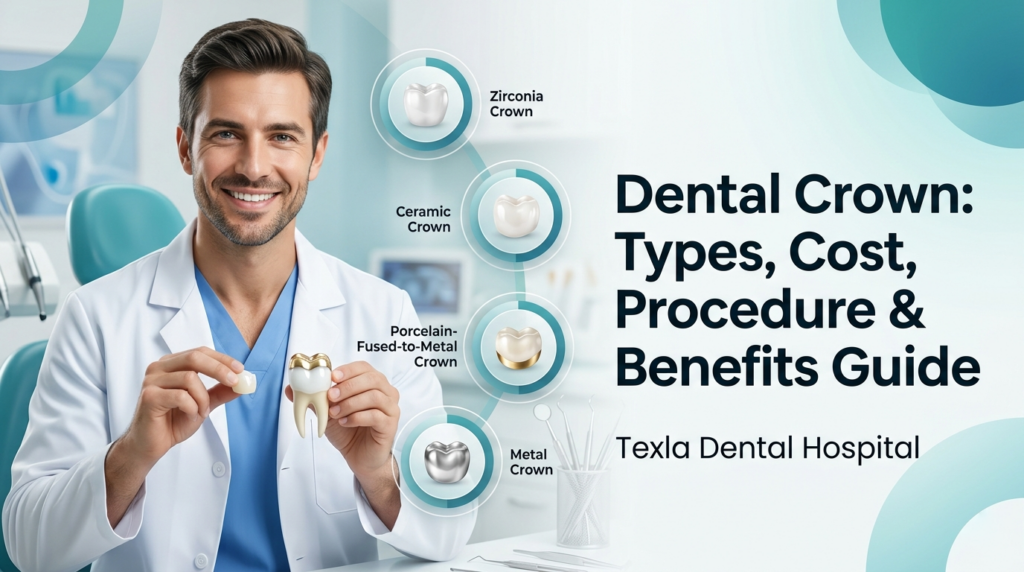
A dental crown is one of the most common and effective ways to restore a damaged tooth. If a tooth is weak, cracked, heavily filled, discolored, or treated with root canal therapy, a crown can protect it and bring back normal chewing function and appearance. At Texla Dental Hospital, we help patients in Kharar, Morinda, Mohali, Kurali, and Ropar choose the right crown based on their tooth condition, smile goals, and budget.
If you are searching for types of dental crowns, dental crown cost, or dental crown procedure, this guide will help you understand the basics in simple language.
What is a Dental Crown?
A dental crown is a custom-made cap that covers the visible part of a tooth. It is designed to restore the tooth’s shape, size, strength, and appearance. In simple words, it works like a protective shell that holds a damaged tooth together.
Dentists often recommend crowns for:
- A cracked or broken tooth
- A tooth with a very large filling
- A tooth weakened after root canal treatment
- A worn-down tooth from grinding
- A tooth that needs cosmetic improvement
- A crown over a dental implant
- A bridge support tooth
Dental Cap vs Crown: Is There Any Difference?
Many people use the terms dental cap vs crown as if they are different, but in most cases they mean the same thing. “Dental cap” is a common public term, while “crown” is the dental term used by dentists.
So, if someone says they need a tooth cap, they usually mean a dental crown.
Types of Dental Crowns
There are several types of dental crowns, and the right choice depends on the tooth location, bite pressure, aesthetic needs, and budget.
1. Metal Crowns
Metal crowns are usually made from gold or other metal alloys. They are very strong and long-lasting.
Best for: Back teeth where strength matters more than appearance
Pros:
- Very durable
- Resistant to chewing pressure
- Long lifespan
Cons:
- Metallic color
- Not ideal for visible teeth
2. Porcelain-Fused-to-Metal (PFM) Crowns
PFM crowns have a metal base with a tooth-colored porcelain outer layer.
Best for: Patients who want a balance of strength and appearance
Pros:
- Strong and reliable
- More natural-looking than metal crowns
- Suitable for front and back teeth
Cons:
- Porcelain can chip in some cases
- Metal line may show near the gum over time
3. Zirconia Crowns
Zirconia is one of the most popular crown materials today because it combines strength with a natural look.
Best for: Both front and back teeth
Pros:
- Strong and durable
- Good aesthetics
- Comfortable fit
- Resistant to wear
Cons:
- Usually more expensive than metal or basic PFM crowns
4. All-Ceramic or All-Porcelain Crowns
These crowns are made completely from ceramic material and look very natural.
Best for: Front teeth and smile zone
Pros:
- Excellent aesthetics
- Tooth-like color and shine
- Good for cosmetic cases
Cons:
- Not always as strong as zirconia for heavy biting areas
5. E-max Crowns
E-max crowns are a premium type of all-ceramic crown known for excellent appearance.
Best for: Front teeth and highly aesthetic cases
Pros:
- Very natural appearance
- Great for smile improvement
Cons:
- May not be the first choice for high-pressure back teeth in all cases
Types of Dental Crowns and Cost in India
The types of dental crowns and cost in India can vary from clinic to clinic, depending on the material, lab quality, dentist experience, and whether any additional treatment is needed before crown placement.
Here is a simple general guide:
- Metal crown: Usually the most budget-friendly option
- PFM crown: Mid-range option with good strength and aesthetics
- Zirconia crown: Higher cost, stronger and more natural-looking
- All-ceramic / E-max crown: Premium cosmetic option
Instead of choosing only by price, it is better to choose a crown based on the tooth’s condition, location, and long-term durability. A cheaper crown may not always be the right crown for your mouth.
Dental Crown Cost: What Affects the Price?
When people search for dental crown cost, they often expect one fixed amount. In reality, the price depends on several factors:
1. Crown Material
The biggest factor is the material used. Metal crowns are usually more affordable, while zirconia and ceramic crowns cost more.
2. Tooth Location
Front teeth usually need better aesthetics, so patients often choose ceramic or zirconia. Back teeth may need more strength.
3. Tooth Condition
If the tooth is badly broken, has decay, or needs root canal treatment first, the overall cost may increase.
4. Laboratory Work
The quality of the dental lab and the precision of crown fabrication also affect cost.
5. Temporary Crown and Additional Procedures
Some crowns need temporary coverage, tooth build-up, post and core, or gum treatment before the final crown is placed.
Dental Crown Procedure: Step by Step
The dental crown procedure is usually completed in 2 visits, although some cases may require extra appointments.
Visit 1: Examination and Tooth Preparation
Your dentist checks the tooth, takes X-rays if needed, and decides whether a crown is the right option. Then the tooth is reshaped so the crown can fit properly.
Impression or Digital Scan
A mold or digital scan is taken to capture the exact shape of the tooth and bite.
Temporary Crown
A temporary crown may be placed to protect the tooth until the final crown is ready.
Visit 2: Final Crown Placement
The permanent crown is checked for fit, color, and bite. Once everything looks correct, it is cemented into place.
Aftercare
You may feel mild sensitivity for a short time, but it usually settles quickly. Once the crown is fixed well, it should feel like a natural tooth.
Does a Dental Crown Hurt?
Most patients are comfortable during crown treatment because local anesthesia is used when needed. Mild sensitivity after the procedure is common, especially if the tooth was already damaged or heavily prepared. This is usually temporary.
How Long Does a Dental Crown Last?
With good oral hygiene and regular dental visits, a crown can last many years. Good brushing, flossing, and avoiding habits like chewing ice, biting pens, or grinding teeth can help your crown last longer.
How to Care for a Dental Crown
To protect your crown:
- Brush twice a day
- Floss daily
- Avoid very hard foods and habits like opening packets with teeth
- Wear a night guard if you grind your teeth
- Visit your dentist regularly for checkups
Proper care helps prevent decay around the crown and keeps the supporting tooth healthy.
When Should You Visit Texla Dental Hospital?
You should consider a crown if you have:
- A broken or cracked tooth
- A tooth after root canal treatment
- A tooth with a large filling
- Severe wear and tear
- A cosmetic issue affecting your smile
- Sensitivity or pain while chewing
At Texla Dental Hospital, we provide personalized dental crown treatment in Kharar and Morinda, and we regularly serve patients from Mohali, Kurali, and Ropar as well.
Dental Crown Treatment in Kharar and Morinda
If you are looking for reliable dental crown treatment near you, Texla Dental Hospital offers experienced care, proper diagnosis, and crown planning based on your tooth condition and budget.
Whether you need a single crown, a cosmetic crown, or crown replacement, our team can guide you through the right option for long-term comfort and function.
Frequently Asked Questions
What is the difference between a dental cap and a crown?
There is usually no difference. A dental cap is a common term, and a crown is the dental term.
Which are the best types of dental crowns?
The best crown depends on the tooth. Zirconia and all-ceramic crowns are often preferred for aesthetics, while metal and PFM crowns are chosen for strength and value.
How much does a dental crown cost in India?
The cost depends on material, lab work, and treatment complexity. Metal crowns are usually cheaper, while zirconia and ceramic crowns are more expensive.
Is the dental crown procedure painful?
It is usually comfortable because local anesthesia may be used. Mild sensitivity after treatment is possible but temporary.
Can a crown be placed after root canal treatment?
Yes. In fact, many root canal-treated teeth need a crown for protection and strength.
Final Thoughts
A dental crown is not just a tooth cover. It is a long-term restorative treatment that can protect weak teeth, improve chewing, and restore your smile. Understanding the types of dental crowns, the dental crown procedure, and the dental crown cost helps you make a smarter treatment decision.
If you are searching for dependable crown treatment in Kharar, Morinda, Mohali, Kurali, or Ropar, visit Texla Dental Hospital for expert guidance and personalized care.