
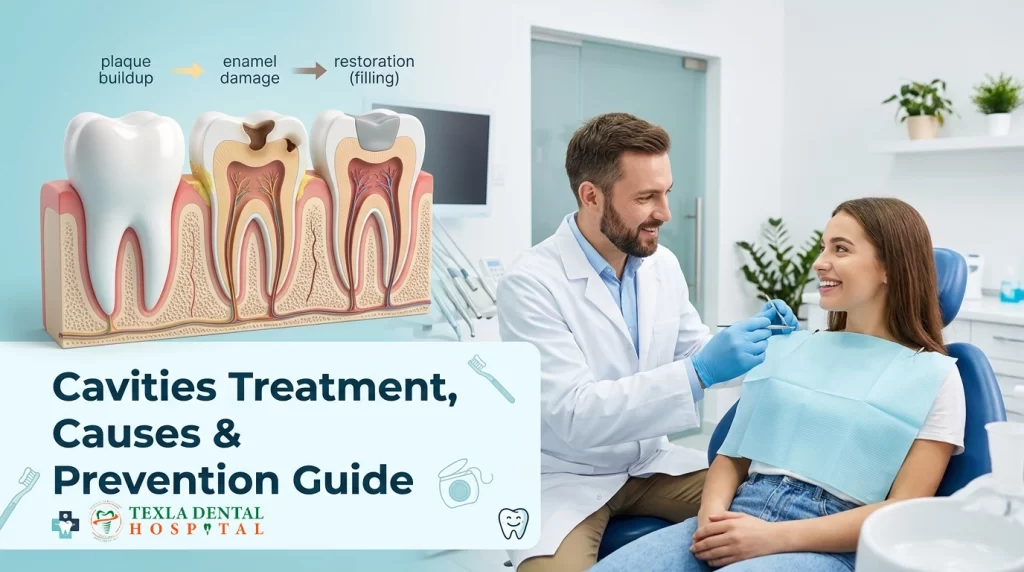
The most common and severe oral problem people face in this modern age is cavities. You can call it dental caries, dental cavities, or tooth decay. All these are the names of pain, infection, or maybe tooth loss. Tooth loss is the stage when you leave cavities untreated.
If you take proper care, stay aware of problems, and follow treatment on time, you can avoid serious issues with your oral health. For that, Texla Dental Hospital provides an experienced, comprehensive guide. This helps you to learn about cavities, the causes behind them, and proper solutions to those issues.
What Are Cavities?
Small holes present in the hard surface of your teeth are known as cavities. They are caused by tooth decay. Cavities form due to bacteria and acids, which slowly damage your teeth. These gaps seem small at first, but they affect your inner layer deeply over time and cause severe pain.
How Are Cavities Formed?
When you understand how cavities form, you can prevent them in the best way.
Here are some simple steps to help you protect your teeth.
Formation of Plaque
When bacteria build up a sticky layer on your teeth.
Attack of Acid
Bacteria live on sugar and produce acid to damage your teeth.
Enamel Damage
Enamel becomes weak due to acid.
Development of Cavity
Holes are formed in a small size, but they damage your oral health over time.
Common Causes of Cavities
Many people ignore the causes of cavities; if they are aware of them, they can avoid them and save their teeth.
- Do not brush the teeth regularly (poor hygiene)
- Excessive use of sugary drinks and foods
- Ignore the plaque buildup
- Lack of salivation (feeling that the mouth is dry)
- Frequent consumption of beverages and acidic foods
- Avoid or delay dental check-ups
Signs Of Cavities
Decay level and advancement determine the symptoms of cavities. Here are some common signs of cavities.
Symptoms at the Early Stage
- Some spots on teeth are just like chalk and white in colour
- Pain is not noticeable
Middle Stage Symptoms
- The tooth becomes sensitive to sweet, cold, or hot
- A small or mild toothache
- Discoloration or maybe some visible holes
End-stage symptoms
- Extreme pain
- Infection or swelling
- Bad or smelly breath
- Feel pain while biting
Regular dental visits are very important because symptoms are not visible in several cases.
Tooth Decay Stages
When the patients understand the different stages of tooth decay, it helps them to have treatment at the early stages.
Demineralisation
When your teeth lose minerals, white spots appear on them.
Enamel Decay
It is the start of a breakdown.
Dentin Decay
As the decay reaches the softer and inner layer, it leads to sensitivity.
Damage To The Pulp
When the infection reaches nerves and blood vessels.
Formation Of Abscess
It is the severe level of oral diseases, with pus, intense pain, and swelling occurring at this stage.
Professional treatment is necessary for severe stages, but cavities can be covered or reversed at early stages.
Diagnosis Of Cavity
Dentists use different ways for cavity diagnosis, such as
- Visual examination
- Use dental instruments to check the soft spots
- To detect the hidden decay, they use X-rays
Diagnosis of a cavity at early stages can help to recover soon before reaching a severe level.
Treatment Options for Cavities
Treatment options vary with the problem level.
Fluoride Treatment
A professional therapy is used to treat the early-stage cavity and work to reverse the minor decay.
Fillings
One of the most common tooth decay treatments is for dentists to remove the decayed part and fill it with special material like composite resin.
Crowns
A cap (crown) is used to cover the damaged teeth; it helps to restore the function and strength of the tooth.
Tooth Extraction
When there is a severe case of a cavity, a dentist goes through this painful process.
A dentist always recommends regular and routine checkups to keep the treatment simple, to save your teeth and money, too.
Treatment Cost of Cavity
Several factors affect the cavity treatment cost.
- Level of problem (severity)
- Required type of treatment
- Kind of material used for treatment
- Location of the clinic
Costs may differ generally because of the following:
- The filling is less in price
- Crowns and root canal treatment are expensive
- Treatment at an early level is less expensive, and severe problems cost more
You can avail yourself of cost-effective and high-quality treatment for cavities at Texla Dental Hospital, our serving areas are:
How To Prevent Cavities?
Texla Dental Hospital provides the best cavity prevention tips for you because prevention is better than cure.
Daily Dental Care
- Brush your teeth twice a day. Prefer to use fluoride toothpaste
- Floss regularly
- Use mouthwash
Careful Eating Habits
- Avoid excessive use of sugary drinks and snacks
- Reduce snacking
- Use plenty of water for drinking
Professional Care
- Regularly visit your dentist
- Prefer professional cleaning
- Take sealants for protection
Excellent oral hygiene and frequent visits to your dentist are effective ways to prevent cavities.