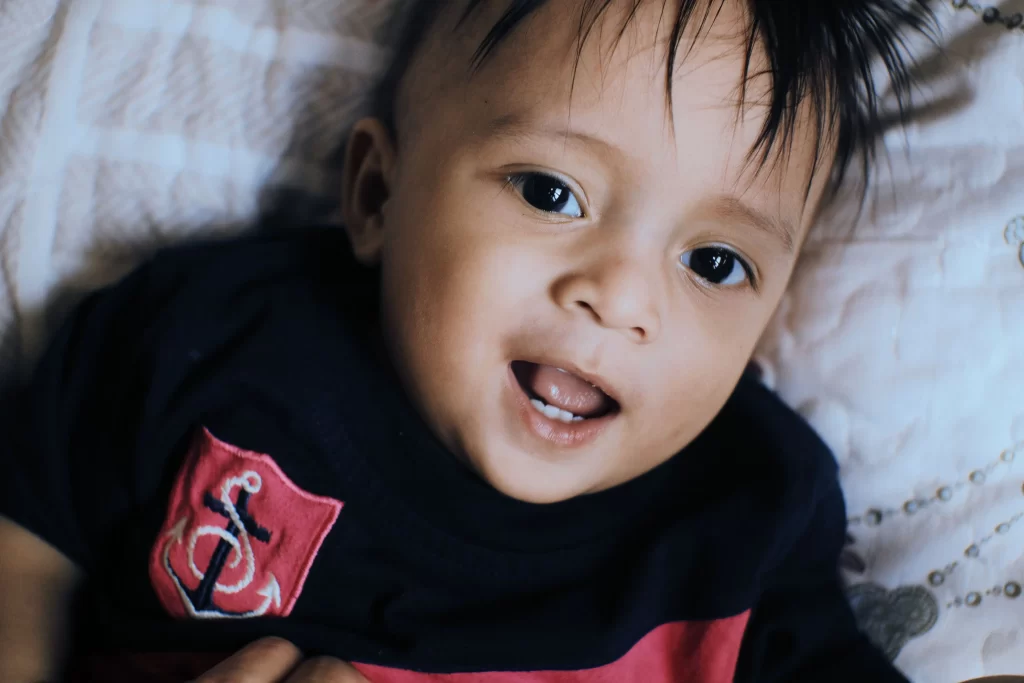
Seeing your baby chew on everything, drool more than usual or become unusually fussy can make you wonder: Is my baby teething? Common baby teething symptoms include tender or swollen gums, increased drooling, chewing and mild fussiness. However, fever, persistent diarrhoea and other signs of illness should not automatically be blamed on teething.
Here’s how to recognise the beginning stages of teething, understand what your baby’s gums may look like, soothe teething discomfort safely and know when it is time to speak with a dentist or doctor.
What Are the First Signs of Teething in a Baby?
The first signs of teething are usually noticed around the mouth. As a tooth moves through the gum, your baby may show several mild changes.
Sore, swollen or tender gums
The gum over an emerging tooth may look slightly swollen or feel tender. Your baby may rub the gums with their fingers or seem more interested in biting down on things.
Some babies show very few symptoms when their teeth appear, so the absence of obvious discomfort does not mean that teeth are not developing.
More drooling and chewing
Increased drooling and a stronger desire to chew are common signs of teething. Babies may put their fingers, toys and other safe objects into their mouths and bite down on them.
Drooling can also irritate the skin around the mouth, sometimes causing a mild rash. Keeping the area gently cleaned and dry can help reduce irritation.
Fussiness, gum rubbing and sleep changes
Mild fussiness can occur when the gums are uncomfortable. Your baby may also rub their gums or temporarily change their feeding or sleeping habits.
However, severe or prolonged distress should not automatically be attributed to teething. If your baby seems significantly unwell, another cause should be considered.
What do teething gums look like?
A teething gum may appear redder, swollen or tender in the area where a tooth is approaching the surface. You may eventually see a small white edge or point of the tooth emerging through the gum.
If you notice unusual swelling, bleeding, injury or another change that concerns you, a dental examination can help determine what is happening.
When Do Babies Start Teething?
Most babies begin teething during the first year of life, but there is considerable variation. HealthyChildren notes that babies typically start teething at around 4 to 7 months, while the NHS describes the first teeth as commonly appearing at around 6 months. Some babies develop teeth earlier or later without this necessarily indicating a problem.
The lower or upper front teeth are commonly among the first to appear, followed by additional front teeth, molars and canines.
Approximate baby teething timeline
Approximate age | Teeth commonly appearing |
Around 4–8 months | Lower front teeth often begin |
Around 6–12 months | Upper and additional front teeth |
Around 12–16 months | First molars |
Around 16–20 months | Canines |
Around 20–30 months | Second molars |
This is an approximate guide rather than a developmental deadline. Tooth eruption can vary from one baby to another. The NHS similarly describes the eruption sequence as a rough guide rather than an exact schedule.
Can a baby start teething at 5 months?
Yes. A baby can begin teething at 5 months. Five months falls within the commonly reported range for the beginning of tooth eruption, although some babies develop their first tooth earlier or later. The timing by itself is usually less important than your baby’s overall health and development.
What Does Teething Pain Look Like?
Teething discomfort is usually related to tenderness around an emerging tooth. Some babies may have very little discomfort, while others become more noticeable about their gums.
You may notice:
- Increased chewing or biting
- Tender or swollen gums
- More drooling
- Rubbing the gums
- Mild fussiness
- Temporary changes in feeding or sleep
Teething does not affect every baby in the same way. Some children have their teeth come through with few noticeable symptoms.
How long does teething discomfort last?
There is no single number of days that applies to every baby. Discomfort can vary around the period when a tooth is emerging and may settle once the tooth has broken through the gum.
If your baby’s symptoms are severe, persistent or getting worse rather than settling, it is better to have the cause assessed instead of assuming that teething is responsible.
What Helps With Baby Teething Pain?
Most babies with mild teething discomfort can be helped with simple, non-medicated measures.
Safe ways to soothe sore gums
- Gently massage the gums. Wash your hands and use a clean finger to apply gentle pressure to the sore area.
- Offer an appropriate teether. A firm, age-appropriate teething ring can give your baby something safe to chew.
- Try a cool washcloth. A clean, cool washcloth may provide soothing pressure for babies who are developmentally ready to use one safely.
- Offer comfort and distraction. Cuddling, feeding and other familiar comforting activities may help your baby settle.
- Ask about medication if needed. If your baby remains significantly uncomfortable, speak with your pediatrician or healthcare professional about whether medication is appropriate.
Healthy Children recommends gum massage and appropriate teethers for teething discomfort and specifically cautions against teethers that become excessively hard when frozen.
Teething remedies parents should avoid
Be cautious about products marketed as quick solutions for teething pain.
Avoid:
- Benzocaine-containing numbing gels
- Unprescribed or homeopathic teething tablets
- Amber teething necklaces
- Teething products that can break into choking hazards
- Frozen-solid teethers or objects that become excessively hard
- Home remedies containing ingredients whose safety is uncertain
The American Academy of Pediatrics warns against benzocaine teething gels, homeopathic teething products and amber teething necklaces. Amber necklaces also present choking and strangulation risks.
Which Symptoms Are Teething and Which May Be Illness?
One of the most important things for parents to know is that not every symptom occurring around the time of teething is caused by teething.
What you notice | Typical of teething? | What to do |
Drooling | Yes | Keep the skin around the mouth clean and dry |
Chewing or biting | Yes | Offer a safe teether |
Tender or swollen gums | Yes | Try gentle gum massage |
Mild fussiness | Possible | Comfort and monitor |
Slight temperature rise | May occur | Monitor your baby’s temperature and overall condition |
True fever | Not a typical teething symptom | Seek medical advice if present |
Persistent diarrhoea | No | Look for another cause |
Persistent vomiting | No | Seek medical advice |
Persistent cough or runny nose | Not a typical teething symptom | Consider another illness |
Baby seems very unwell | No | Seek medical attention |
Does teething cause fever?
A true fever should not simply be attributed to teething. HealthyChildren states that a temperature above 38.3°C (101°F) is probably not from teething, while other pediatric guidance also distinguishes a true fever from the slight temperature changes sometimes reported around tooth eruption.
If your baby has a fever, particularly if they appear unwell, speak with your pediatrician or healthcare professional rather than assuming the fever is caused by a new tooth.
Does teething cause diarrhoea, cough or a runny nose?
These symptoms should not automatically be considered signs of teething.
The NHS states that there is no evidence that teething causes diarrhoea. HealthyChildren likewise identifies diarrhoea, fever and runny nose among symptoms that should not simply be blamed on teething.
Babies can develop infections or other illnesses at the same age that their teeth begin appearing, so the timing can sometimes make the two seem connected.
When Should You Contact a Dentist or Doctor?
Contact a healthcare professional if your baby:
- Has a true or high fever
- Has persistent diarrhoea or vomiting
- Has ongoing cough or respiratory symptoms
- Appears unusually unwell or difficult to settle
- Has significant difficulty feeding
- Has concerning swelling in or around the mouth
- Has an oral injury
- Has symptoms that are severe, persistent or getting worse
- Has an unusual change in the gums or an emerging tooth that concerns you
Teething itself is a normal developmental process. The important distinction is whether your baby’s overall condition is consistent with mild teething discomfort or whether there are symptoms suggesting another problem.
When should a baby see a dentist?
The American Academy of Pediatric Dentistry recommends that a child’s first dental examination take place when the first tooth appears and no later than 12 months of age. Early visits provide an opportunity to assess developing teeth and gums and give parents preventive oral-care guidance.
What should you do after the first tooth appears?
Teething is only the beginning of your baby’s dental journey.
Before the tooth appears: focus on keeping the baby’s mouth clean and managing teething discomfort.
Once the first tooth appears: begin an age-appropriate tooth-cleaning routine. AAPD guidance recommends brushing erupted baby teeth with a soft toothbrush and an appropriate amount of fluoride toothpaste.
Once several teeth are present: regular brushing and early dental guidance become increasingly important for preventing tooth decay.
Worried About Your Baby’s Teeth?
If you’re unsure whether your baby’s symptoms are related to normal teething or something that needs attention, a pediatric dental assessment can help distinguish normal tooth eruption from other oral concerns.
Book a pediatric dental consultation at Texla Dental Hospital!
Frequently Asked Questions About Baby Teething
What are the first signs of teething in a baby?
The first signs can include tender or swollen gums, increased drooling, chewing and mild fussiness. Your baby may also rub their gums or put their fingers and toys in their mouth more often. Not every baby experiences noticeable discomfort, so the absence of these signs does not necessarily mean that a tooth is not developing.
At what age do babies usually start teething?
Babies commonly begin teething during the first year, often around 4 to 7 months, although the timing varies considerably. Some babies get their first tooth earlier and others later. The lower or upper front teeth are commonly among the first to appear.
Can a baby start teething at 5 months?
Yes. Five months is within the range in which some babies begin teething. A baby’s exact eruption schedule can vary, so getting a first tooth at 5 months is not unusual by itself. What matters more is your baby’s overall health and development.
How can I tell if my baby’s gums are teething?
Look for a local area of gum tenderness, swelling or redness where a tooth appears to be approaching the surface. You may also notice increased chewing or gum rubbing. Eventually, a small white edge of the emerging tooth may become visible through the gum.
How long does baby teething pain last?
There is no fixed duration because babies experience teething differently. Discomfort may occur around the time a tooth is emerging and generally settles as the eruption progresses. If pain or distress is severe, persistent or worsening, don’t assume that teething is the only possible cause.
Does teething cause fever?
A true fever should not be considered a normal teething symptom. A baby’s temperature may change slightly around the time of teething, but a temperature of 38°C or higher should not simply be dismissed as teething. If your baby has a fever or seems unwell, seek medical advice.
What is the safest way to relieve baby teething pain?
For mild discomfort, try gently massaging the gums with a clean finger and offering an appropriate cool teether or clean cool washcloth. Avoid benzocaine gels, homeopathic teething products, amber necklaces and frozen-solid teethers. If your baby remains significantly uncomfortable, ask a healthcare professional about appropriate pain relief.
When should I worry about my baby’s teething symptoms?
Seek professional advice if your baby has a true fever, persistent diarrhoea or vomiting, ongoing respiratory symptoms, significant feeding difficulty, unusual swelling, oral injury or appears very unwell. These symptoms should not automatically be attributed to teething. When in doubt, having your baby assessed is safer than assuming that every symptom is part of tooth eruption.